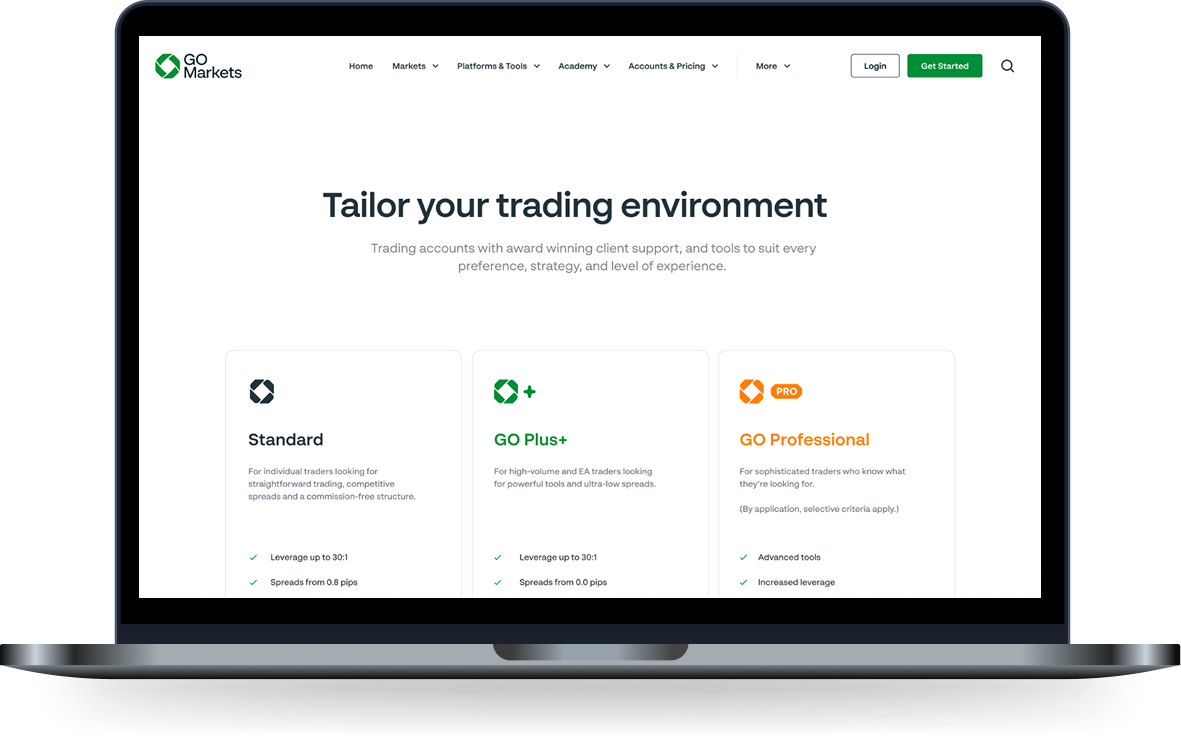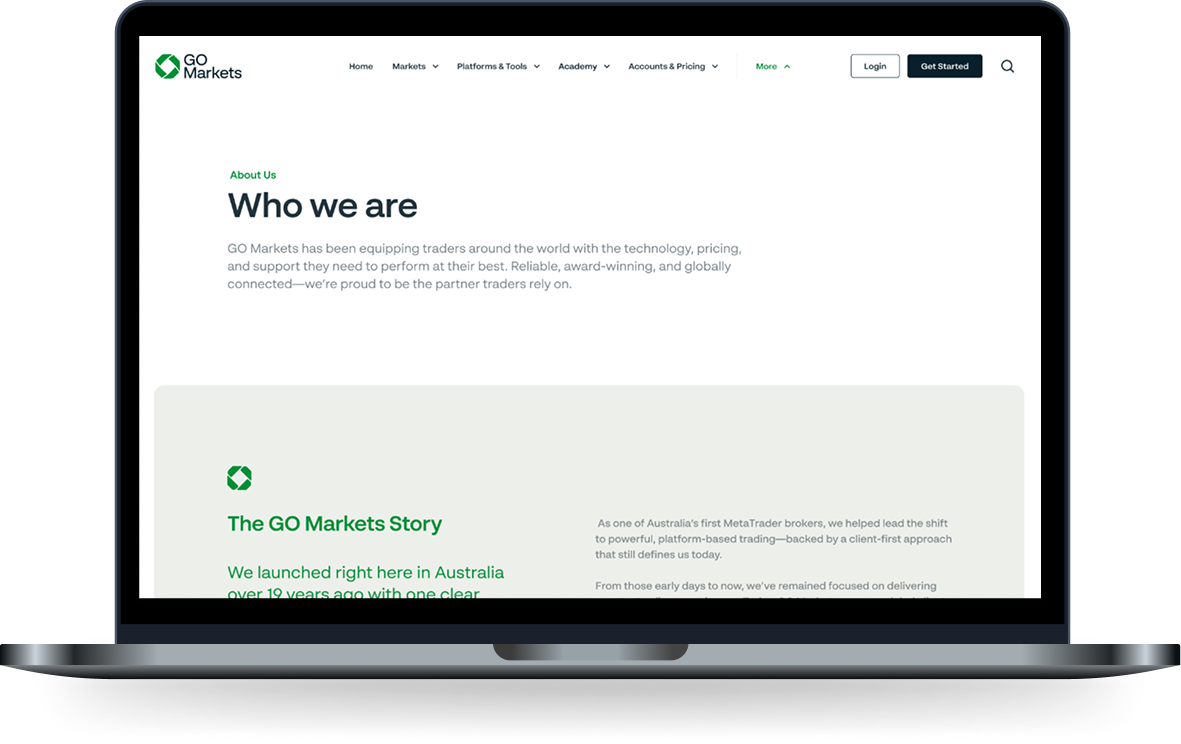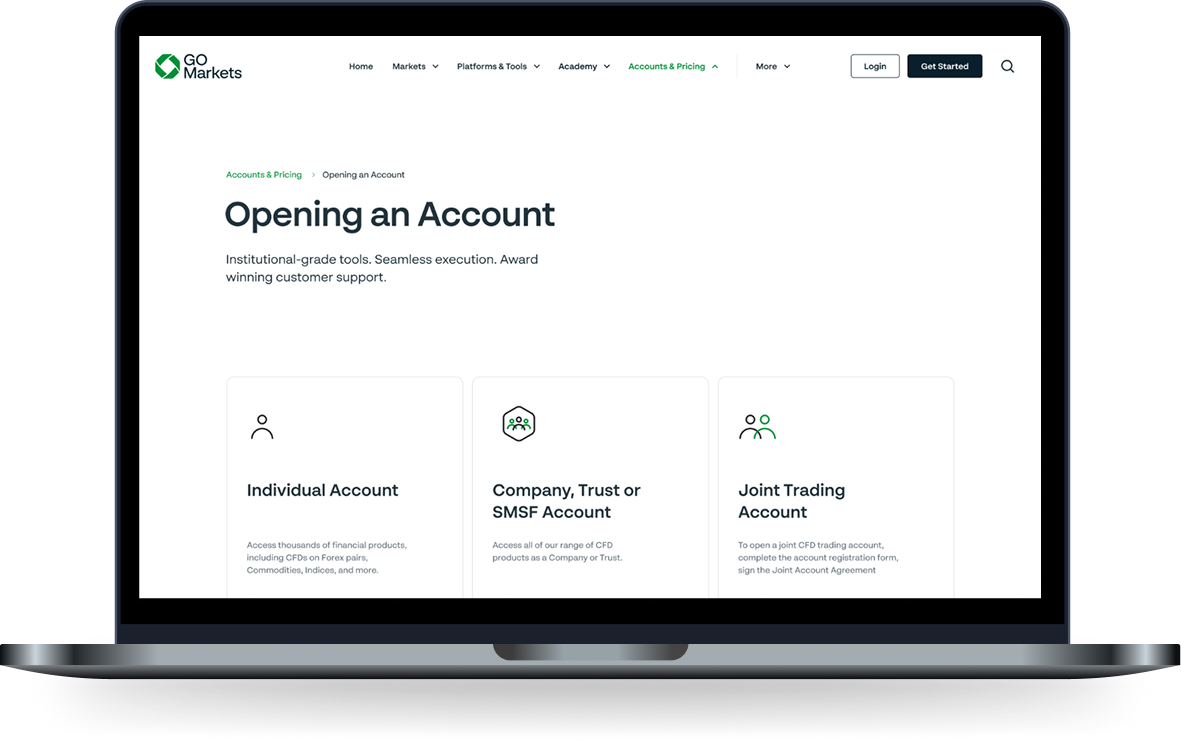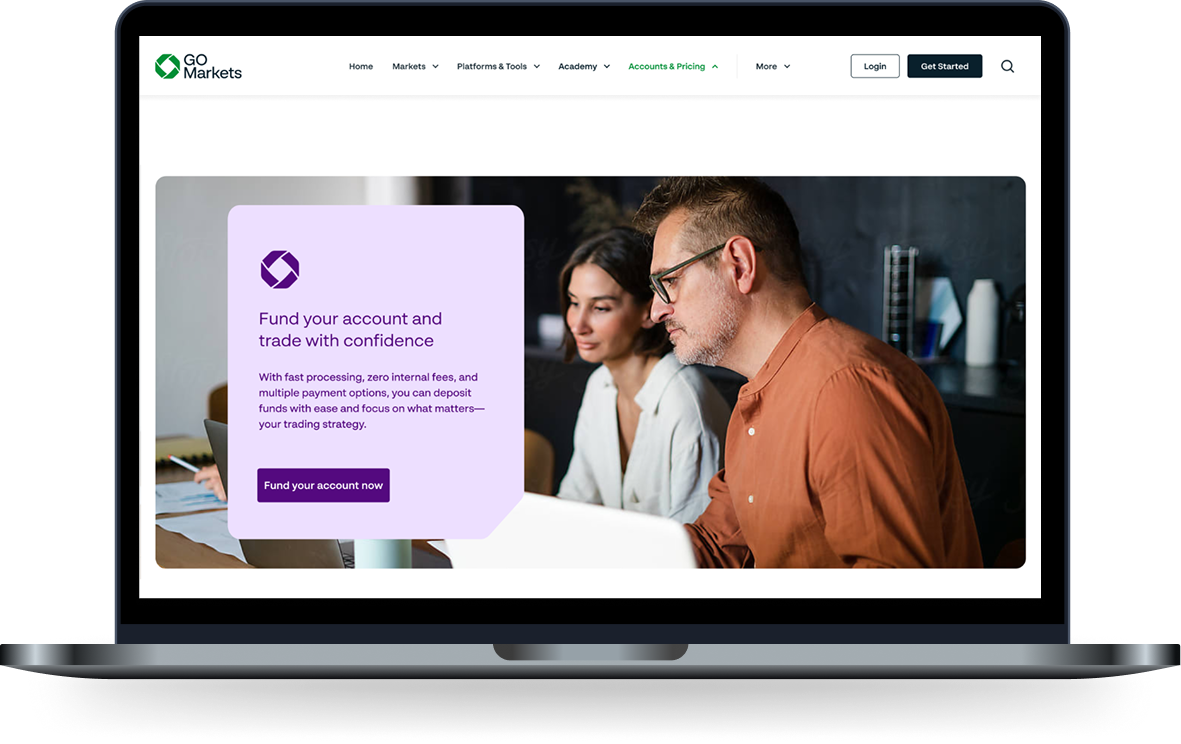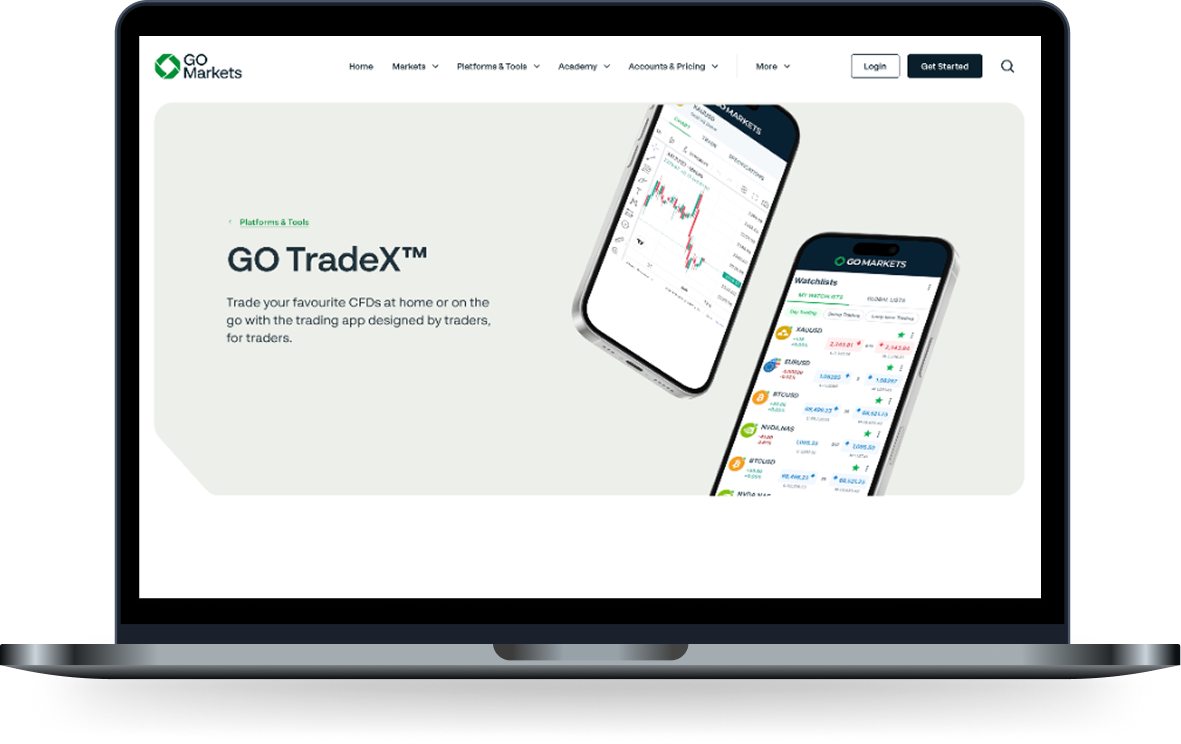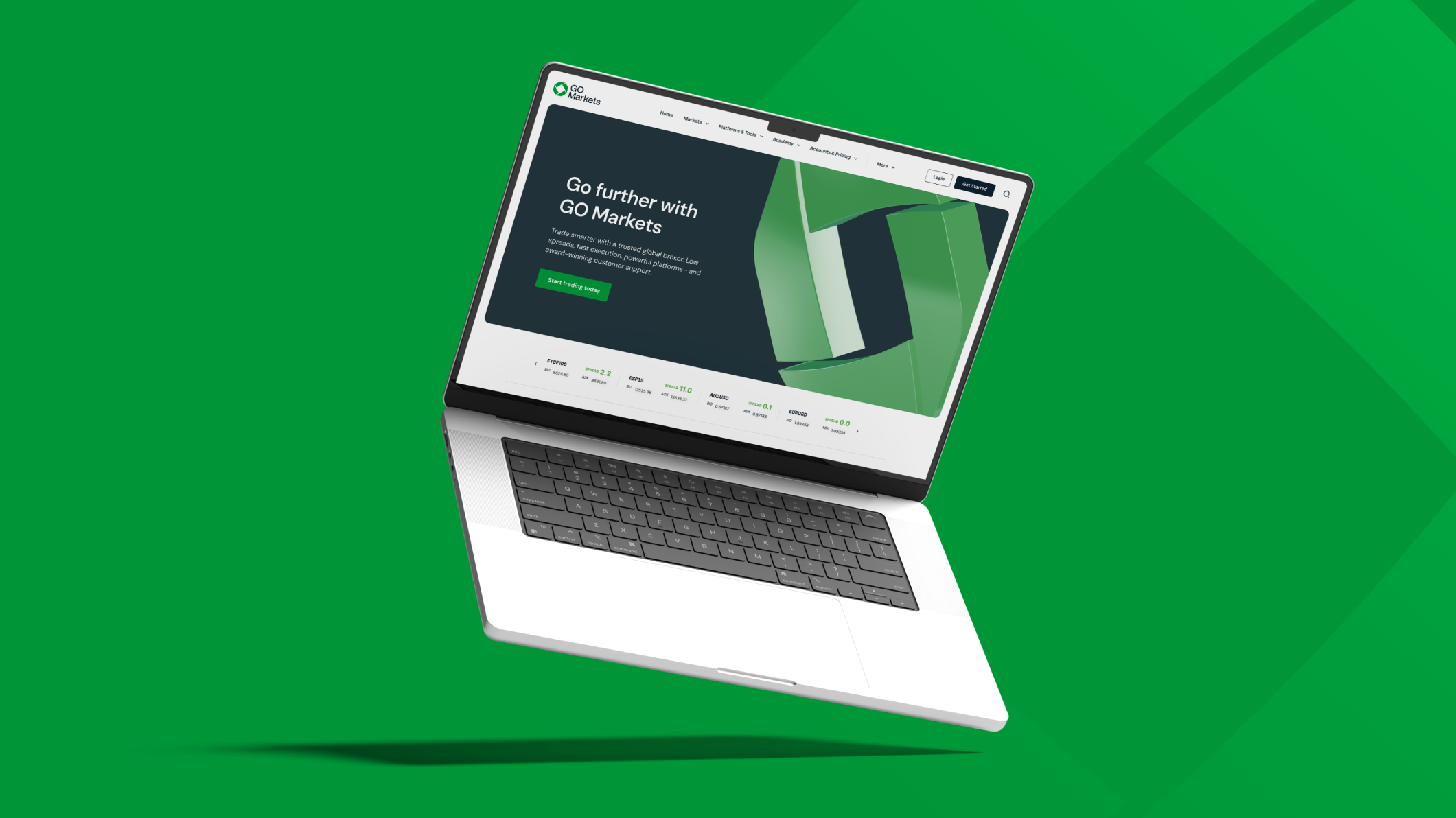
GO Markets website on laptop, case study cover
CLIENT

GO Markets

GO Markets is an Australian online broker offering retail and institutional clients access to global markets across forex, CFDs and indices. Founded in 2006 and regulated by ASIC, the firm sits between the premium broker tier (IG, CMC Markets) and the value end of the market.

BRIEF

Designing and building a trusted resource for a global broker

GO Markets engaged Conduct for a brand refresh, a full content rewrite, and an end-to-end design and build of a new website on Webflow, replacing a long-running WordPress build that no longer matched the firm’s market position.

Where the previous site was holding GO Markets back

GO Markets came to us with a website that had stopped performing as a market-facing asset. Years of incremental change had left the site out of step with where the brand had moved and what the product range now looked like. Pages had accumulated that no longer earned their place: the Education Hub needed consolidating, and the Share Trading page was an artefact of an older product mix.

The deeper problem was structural. The information architecture had been built around the business’s internal product silos rather than around the way prospective traders actually evaluate a broker: regulation first, costs second, platform third. And the brand sitting on top of that IA was hard to distinguish from other online brokers, with a voice that had fragmented across years of authoring without a documented reference.

That gave us a clear-eyed starting point. The rebuild wasn’t a coat of paint. It was a brand, content and IA project with a Webflow build attached.

Two Conduct team members reviewing work at a desk

Refreshing the brand alongside the website

GO Markets had a recognised name in the Australian online broker market, but internally the team described the brand itself as hard to distinguish from global competitors. The website rebuild was the moment to fix that.

We ran the brand work in parallel with discovery: brand workshops with the CMO and senior stakeholders, a competitive audit, an audience breakdown across retail, institutional and prospective-trader cohorts, and a content strategy that defined the new voice. What came out of it:

  • A documented brand voice and tone guide.
  • An audience breakdown across the firm’s primary cohorts.
  • A refreshed visual identity, defined as a brand style guide.
  • Content themes and key messaging aligned to the audience work.
By the time high-fidelity design started, GO Markets had a single brand reference everyone could write and design to. The website became the first surface to embody it, and campaigns, product pages and educational content now ship from the same foundation.

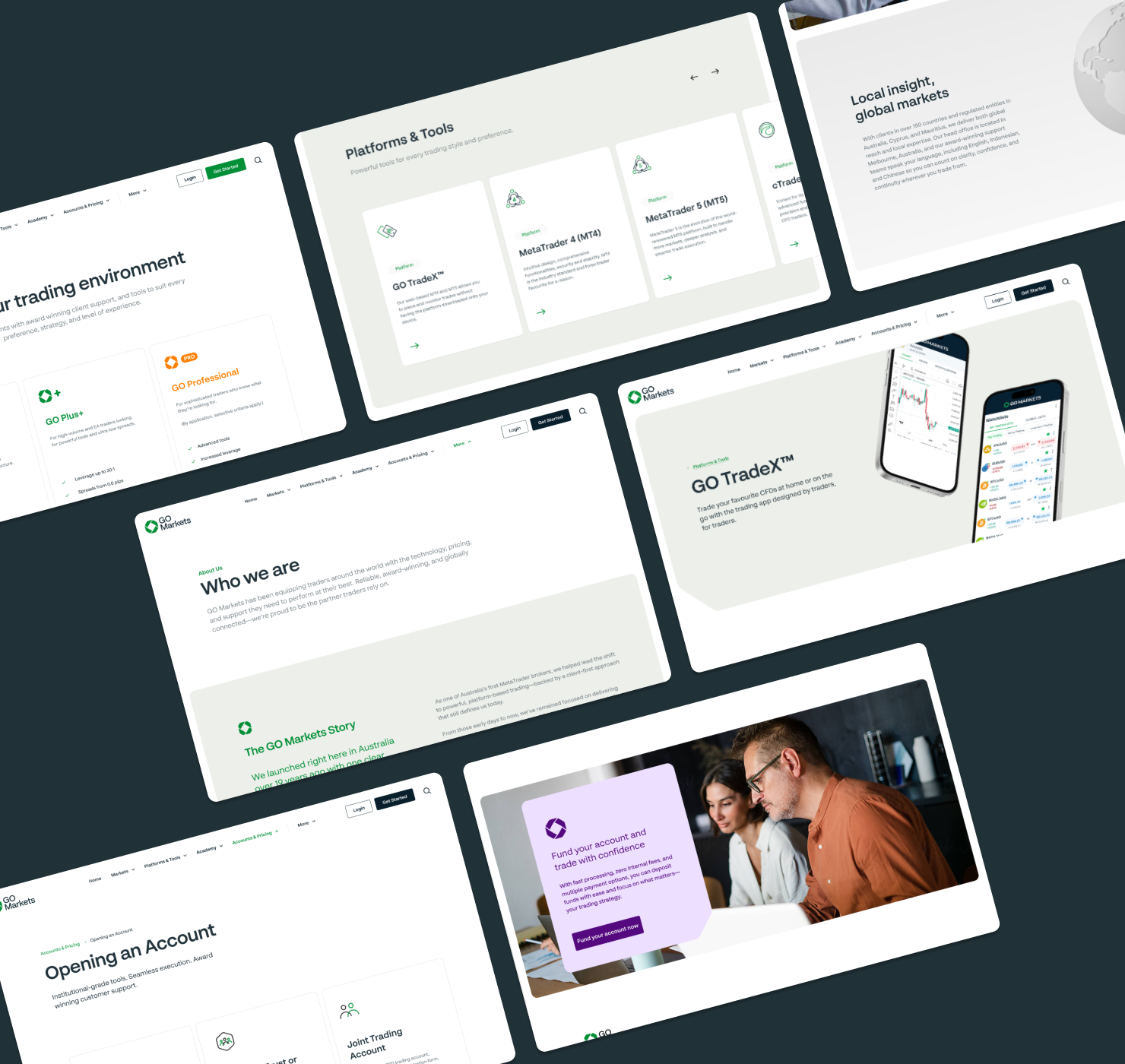
Mosaic of GO Markets pages built on the new design system

Rewriting the content, then moving the site to Webflow

The brand work made it clear that the content underneath couldn’t carry across as-is. Years of authoring by different people had left tone, terminology and structure inconsistent across the site, even where individual pages were technically accurate.

The plan was to rewrite, not just migrate. Working from the brand voice document and the content strategy agreed in discovery, the content team worked through the site page by page against four decisions:

  • Rewrite, where a page was load-bearing but tonally off, or where messaging needed to align with the new positioning.
  • Consolidate, where multiple thin pages could collapse into a single stronger one.
  • Keep and reformat, where the existing copy worked but needed to sit in the new templates.
  • Retire and 301-redirect, where a page no longer earned its place at all.
Compliance copy was the deliberate exception. Where ASIC-regulated content was carrying disclosures or product terms that had already passed review, we audited rather than rewrote, to avoid the regression risk of putting reviewed copy through a fresh approval cycle.

Once content decisions were locked, the move to Webflow was the easy part. The Webflow CMS collections had been defined to match the content model agreed in discovery, and URL redirects were maintained against the legacy WordPress slugs so search engines kept a clear path through the move. By the time the new site went live, every page on the previous WordPress build had a defensible destination on Webflow.

WordPress logo connected to Webflow logo, content migration visual

A responsive design system in Webflow

Webflow was chosen for the build during discovery. Three reasons: brand-led visual flexibility, fast iteration for a marketing team that runs frequent campaigns, and the production maturity to host a regulated financial services brand. Once the platform call was made, we designed for it deliberately.

That meant building a responsive design system first and pages second. Reusable components (hero patterns, content blocks, market widgets, CTA structures, navigation states) were designed once in Figma, defined at breakpoints, documented, and then composed into pages in Webflow. The dividend showed up in four places:

  • Faster design and development. Once the system was in place, new pages composed in hours instead of days. Most of the build effort lived in the first wave of components. Every page after benefited.
  • Consistent experience across devices. Components were designed responsive-first, not desktop-then-mobile. Tablet and mobile weren’t a second pass; they were the same pass.
  • Smoother handoff between design and code. Named patterns in Figma matched named components in Webflow. Less translation, less drift, fewer “the prototype shows X, the build shows Y” rounds.
  • Easier scaling. Adding new pages or campaign surfaces became a composition exercise, not a redesign. The marketing team owns that work now.
QA happened progressively rather than at the end. Each page was tested as it shipped into the staging environment, so the final pre-flight pass before go-live was a tightening exercise rather than a discovery exercise.

Compliance review built into the project plan

A trading website is a regulated content surface. For GO Markets the obligations are ASIC’s: Target Market Determinations and Design Distribution Orders, both of which shape how product pages can describe what’s being offered and to whom.

Compliance was treated as a project dependency from kickoff rather than a last-mile checkbox. Every page draft touching a product followed the GO Markets review chain (CMO, compliance, support and sales), with timing baked into the schedule so compliance turnaround didn’t become the bottleneck. The content team drafted into that flow rather than around it.

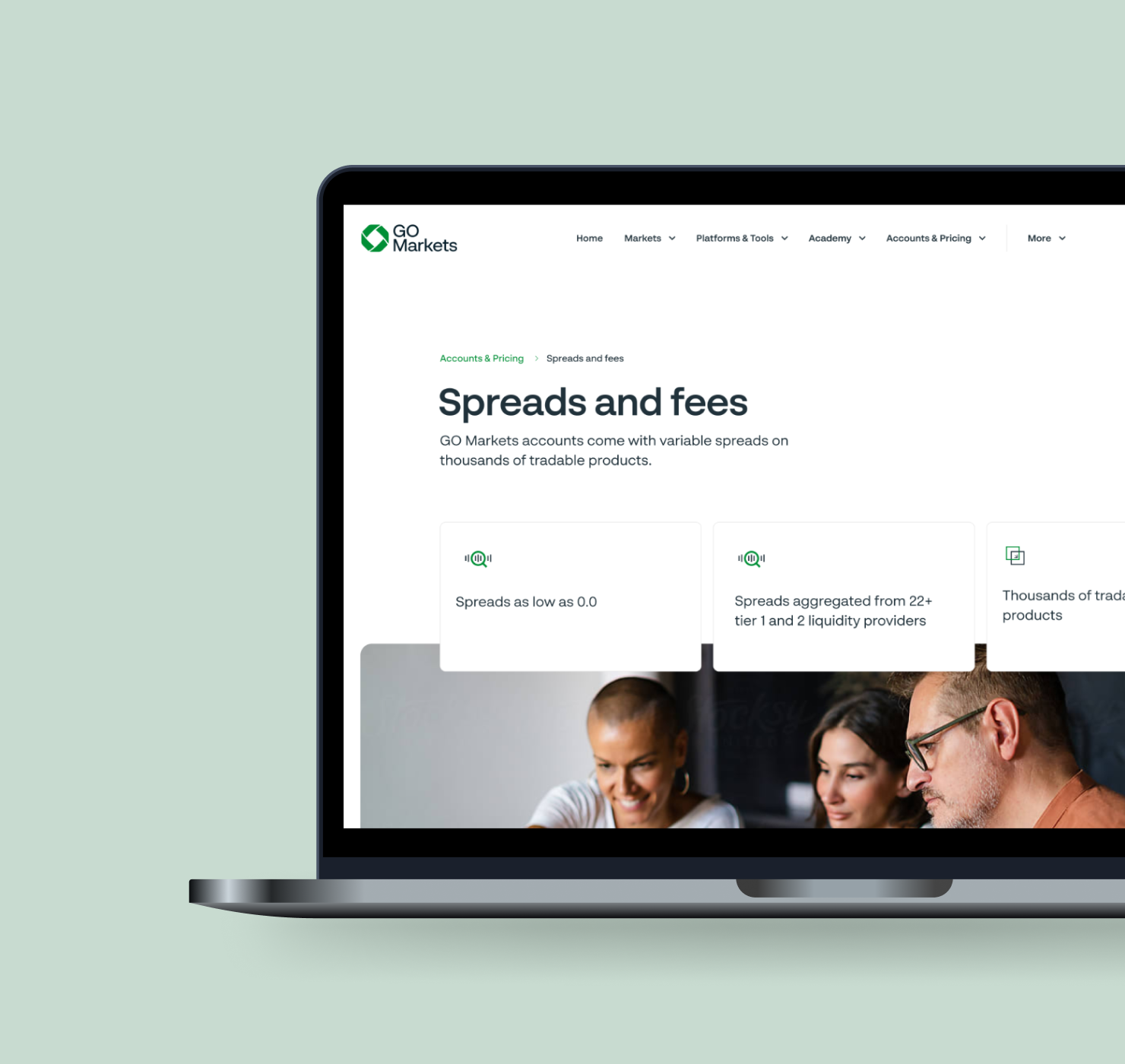
GO Markets Spreads and Fees page, a regulated content surface on the new Webflow site

Where Webflow earned its place

Two things underwrite that claim. The first is the trust foundation: Webflow’s certifications (SOC 2 Type II, ISO 27001, GDPR, PCI DSS, DORA alignment) are unusually deep for a visual-builder platform, which meant the platform call didn’t become a compliance debate. The second is three platform features that keep a compliance-heavy review chain workable in practice:

  • Editor mode. Compliance, support and sales reviewers can edit copy in-context on the live page layout without exposing the design layer they shouldn’t be touching.
  • Staging environment. Approved-but-unpublished changes wait safely on a webflow.io subdomain until the wider review is complete, before being pushed to production.
  • Version history. Every published change creates a restore point, doubling as a built-in audit trail if the regulator ever asks what was on the site when.
None of this replaces the review chain itself, but it keeps the loop close to the page rather than scattered across email threads.

Webflow logo, the platform on which the new GO Markets website was built
We're a regulated business in a market that doesn't forgive imprecision. From the outset, Conduct earned our trust by getting the foundations right: information architecture, brand voice, content strategy, before any high-fidelity design. They treated compliance as part of the project plan rather than a final-hurdle review, and the result was a website our CMO and compliance team both stood behind from launch. The delivery experience was as good as the outcome: the design thinking was contemporary in the way that matters, the team was straightforward to work with, and we trusted the approach the whole way through. Khim Khor COO, GO Markets

Our impact

  • A brand refresh delivered as a documented voice and tone guide, an audience breakdown, a refreshed visual identity and a brand style guide, giving GO Markets a single brand reference for everyone writing and designing on its behalf.
  • End-to-end design and build of a new website on Webflow, replacing a long-running WordPress build that had stopped serving the business.
  • A full content rewrite and migration from the legacy WordPress site, with every page audited against the new brand voice and the new IA, and 301-redirected to its new home to preserve organic search equity.
  • A responsive design system of reusable components, designed once, documented, and composed into pages by the in-house team after handover.
  • An information architecture rebuilt around how prospective traders actually evaluate brokers (regulation first, costs second, platform third), giving clients a clearer path through the site.
  • Content production aligned with GO Markets’ ASIC review chain (CMO, compliance, support and sales), with regulatory obligations (Target Market Determinations and Design Distribution Orders) accounted for in the project schedule rather than at the end.
  • A Webflow CMS the in-house marketing team owns and ships from, without engineering dependency on each release.

Visit the live site at gomarkets.com/en-au.

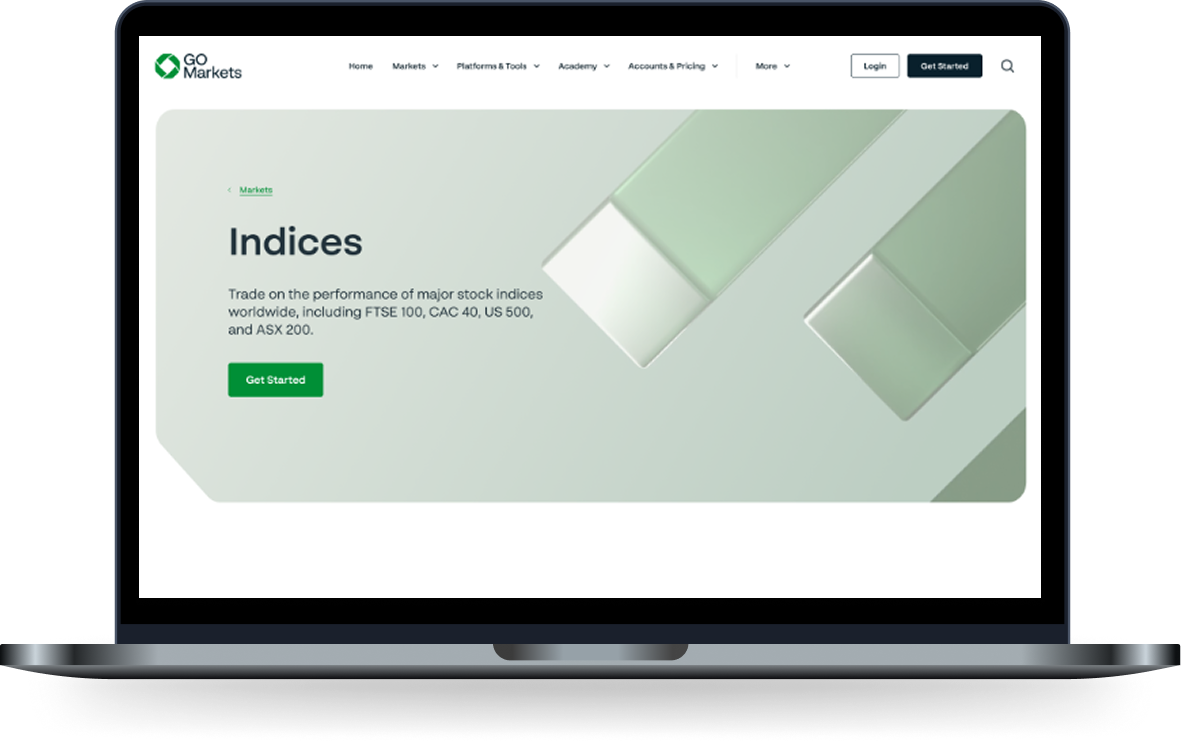
GO Markets Indices product page on the new Webflow site GO Markets trading account comparison page on the new Webflow site GO Markets Who we are brand-led About page on the new Webflow site GO Markets Opening an Account page on the new Webflow site GO Markets Fund your account page on the new Webflow site GO Markets GO TradeX trading app product page on the new Webflow site


Services We Offer Australia-wide include:

App Development

Software Development

UX & UI Design

Melbourne HQ

Level 3/88 Jolimont St,
East Melbourne VIC 3002
hello@conducthq.com
1300 368 277

Office hours

Monday – Friday
8:30am – 5:30pm AEST
Closed weekends and
Australian public holidays