A Yooralla support worker collaborating with a wheelchair user on a laptop in a home setting
CLIENT

Yooralla

Yooralla is one of Victoria’s oldest and most recognised disability support organisations, providing a wide range of services and programs for people of all ages living with disability across Melbourne and regional Victoria.

BRIEF

Build a customer portal for NDIS transparency and self-management

Yooralla needed an entirely new digital platform to improve transparency around funding allocation and service delivery, help customers self-manage their services, and include an assessment framework aligned to NDIS goal reviews.

What we designed and built, and what it did

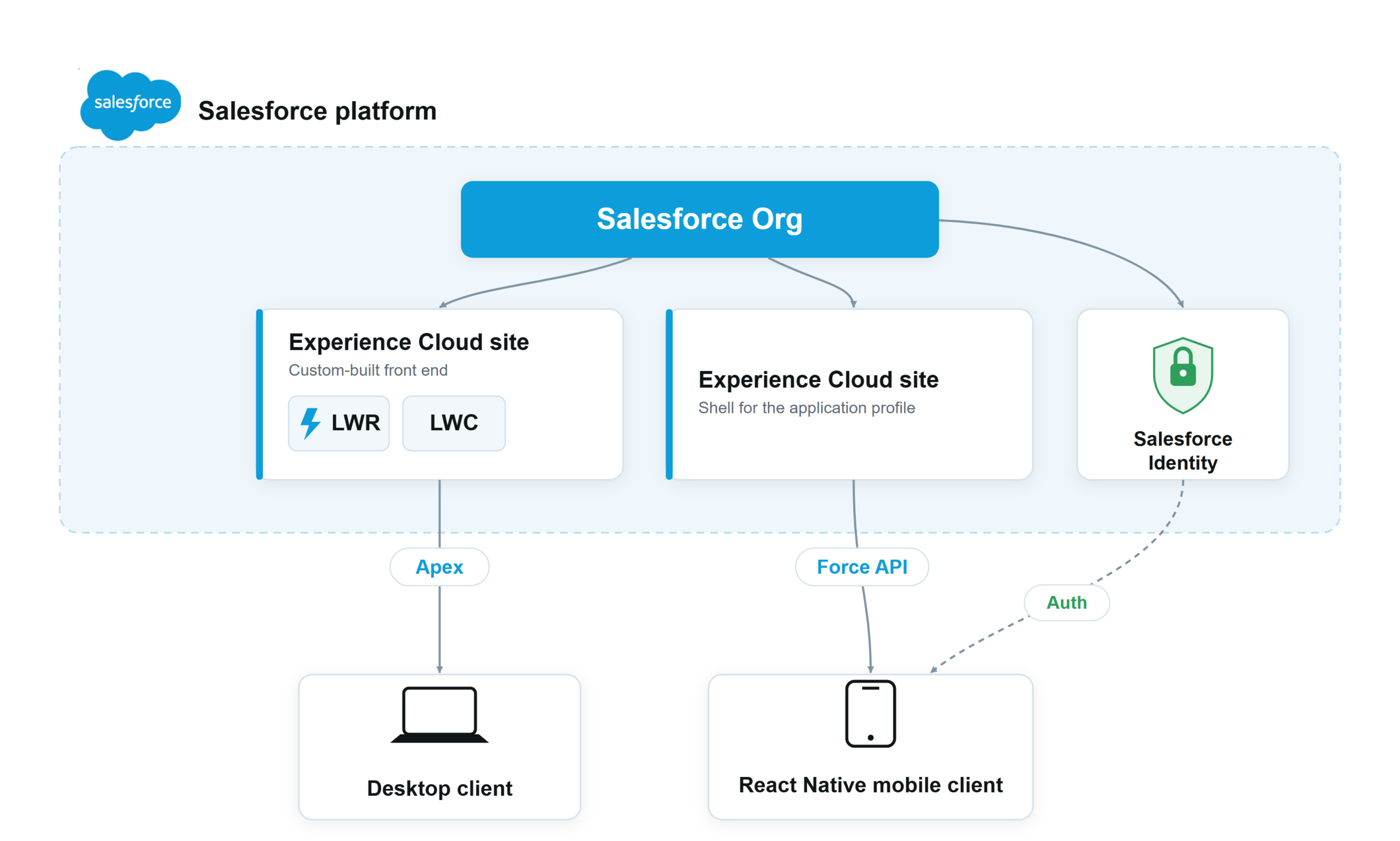
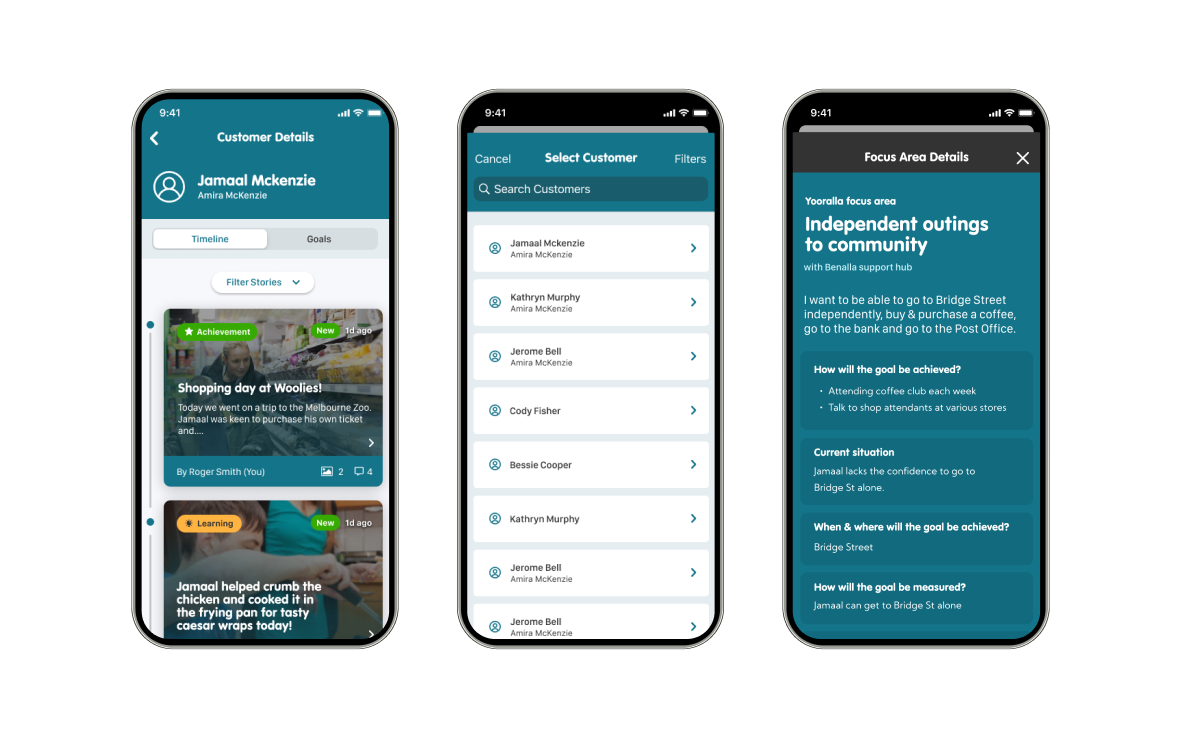
We designed and built a connected system for Yooralla: a customer portal for each person and their support network, a mobile app for carers to capture moments in the field, and an integration into the Salesforce platform Yooralla already ran on. In the first month after launch, carers created more than 4,000 progress stories, each tied to a person’s NDIS goals and ready to support the next funding review.

Starting from scratch with the people who matter

With no existing portal to iterate on, we began our discovery phase through internal stakeholder interviews and feature workshops, working closely alongside Yooralla’s Chief Experience Officer and his team. We ran extensive staff interviews to deeply understand pain points, needs and potential barriers to user uptake.

From there, we moved into wireframing, non-functional prototyping and internal prototype validations based on Yooralla’s specific feature requirements, establishing the foundation for an entirely new platform.

A couple including a man using a wheelchair talking with a Yooralla support worker at a kitchen table

Designing for the full range of human experience

We conducted significant human-centred design research with participants with diverse needs and preferences. Some represented themselves, others were accompanied by a carer. We also spoke to people attending programs at Yooralla and their accompanying care workers. The experience of living with disability is incredibly varied, so we adjusted our research approach accordingly, ensuring each participant had an experience that met their individual needs.

Human-centred design always accounts for the end user, but a project like this carries greater ethical weight, so co-design with people living with disability sat at the centre of our process. Our iterative cycle of end-user validation and co-design gave them a genuine say in shaping the product. Testing showed that more visual elements prompted greater engagement, as users could see what an activity was likely to be without needing to read. The final designs became simpler and more visual as a direct result.

Yooralla disability services brand mark on a teal background

One place for funding, activities, goals and progress

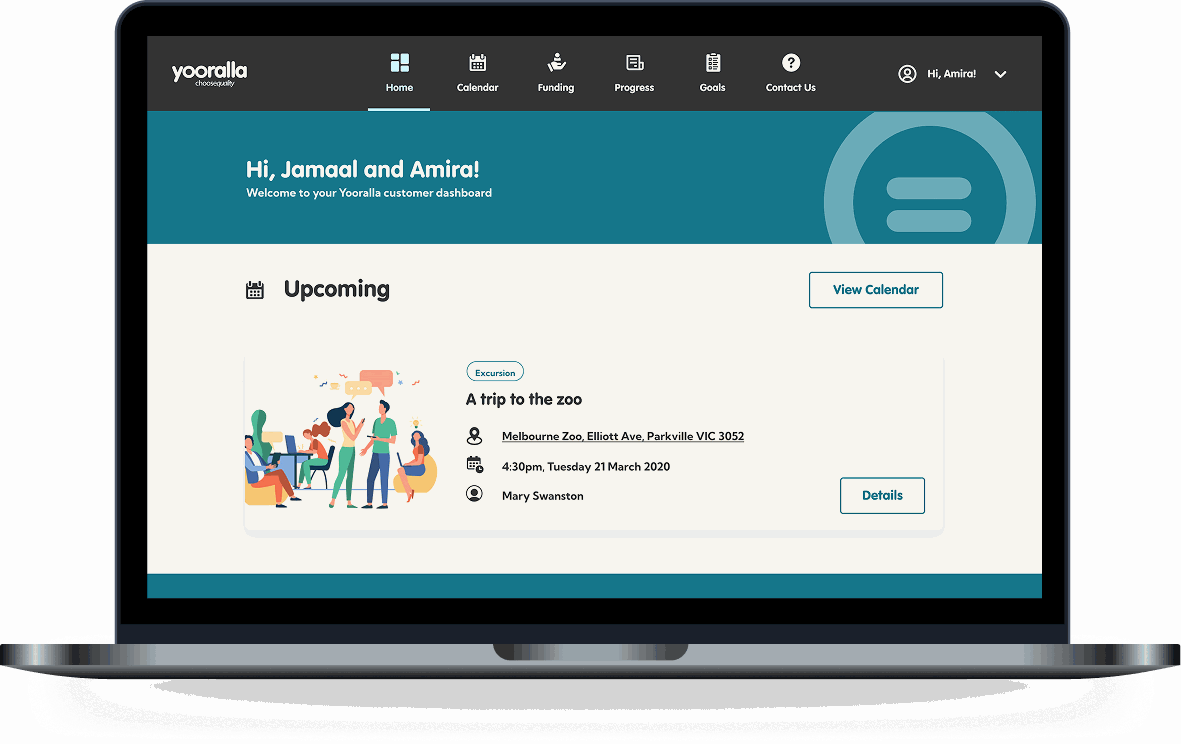
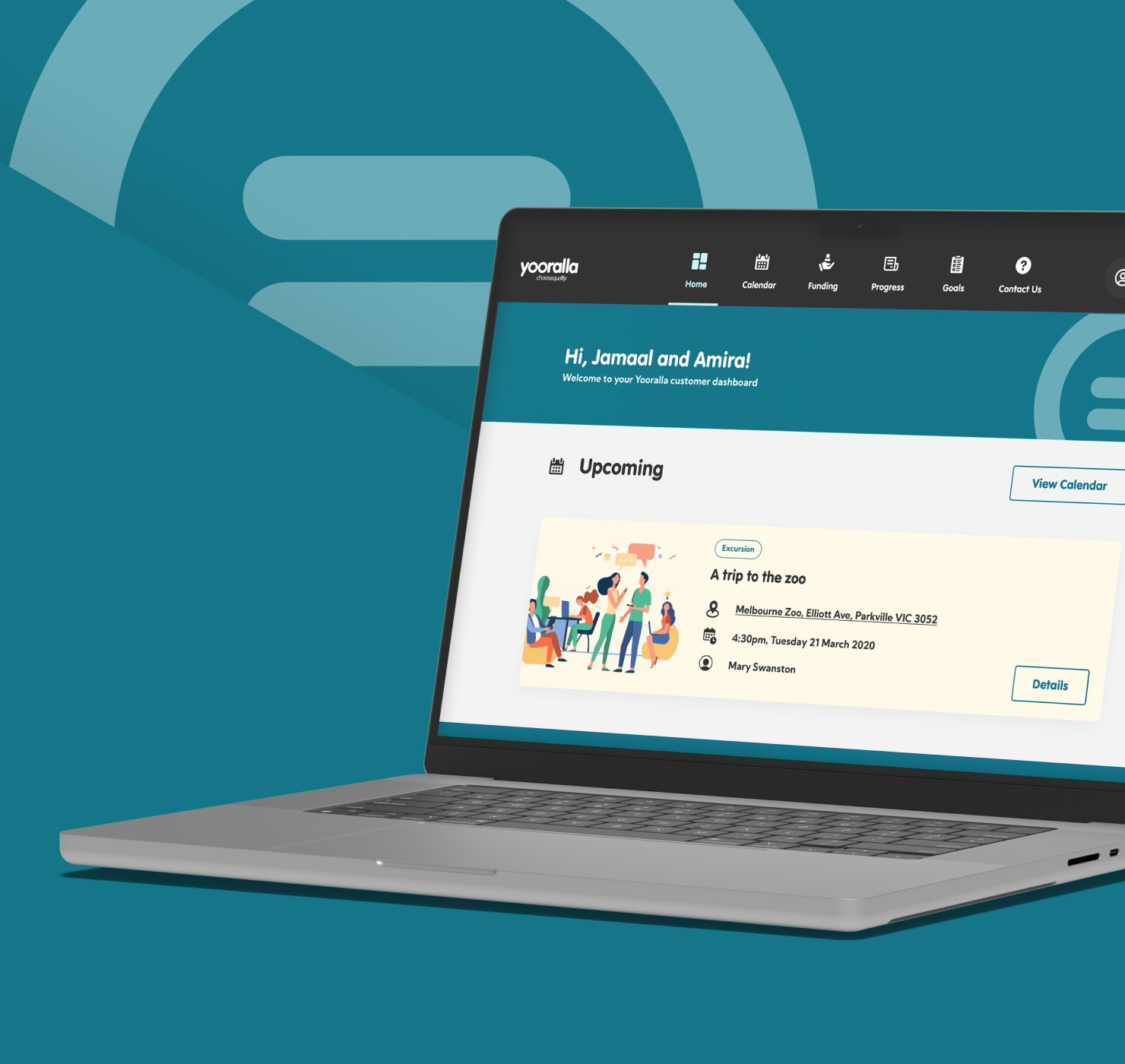
The portal is where a person and the people who support them see their Yooralla services in one place. The dashboard shows what is coming up, like an upcoming excursion, with the full calendar a click away.

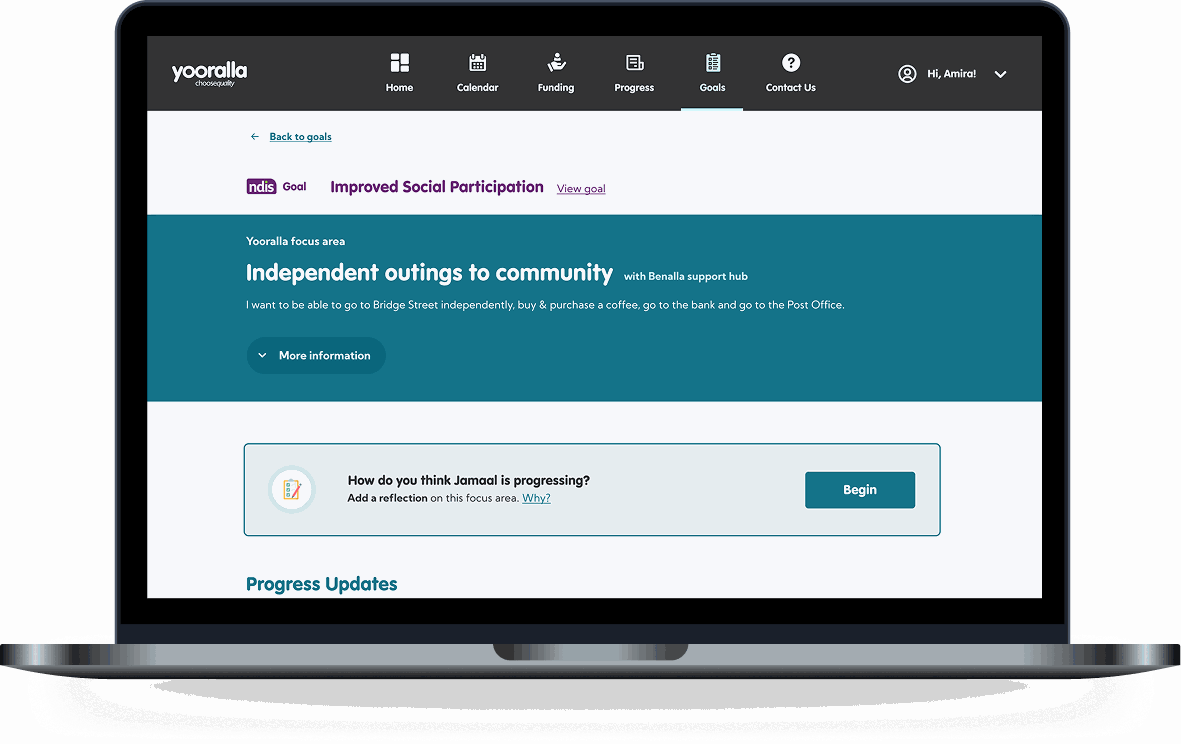
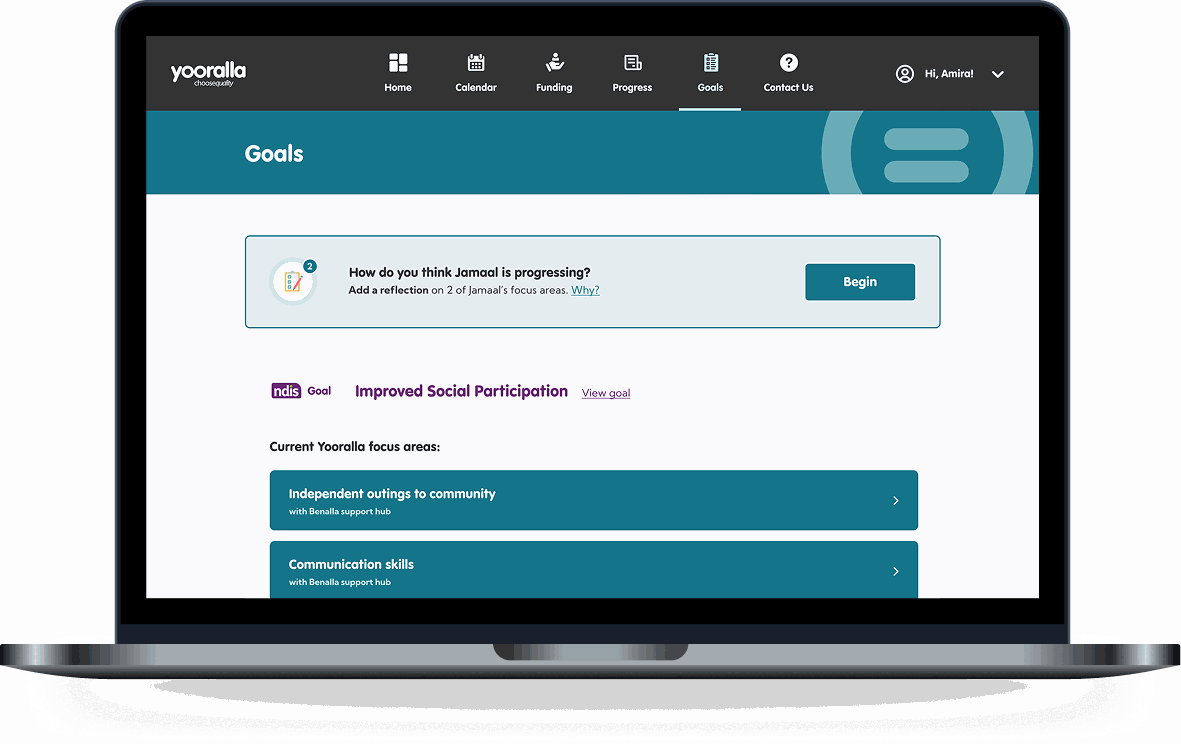
A dedicated funding view brings transparency to how NDIS funding is allocated and used, which was the reason Yooralla first came to us. The goals view holds each person’s NDIS goals and the Yooralla focus areas beneath them, such as independent outings or communication skills, and invites the support network to reflect on how things are tracking.

Yooralla customer portal home dashboard with upcoming events

From assessment framework to Progress Stories

That reflection step was the hardest part to get right. Testing with support workers revealed why: they were initially resistant to the assessment framework, seeing it as a waste of time. But we also learned that when they drop off their clients, they would often share the small, valuable moments of progress from that day. The existing system gave them no way to capture those details, the moments that over time aggregate into a powerful story.

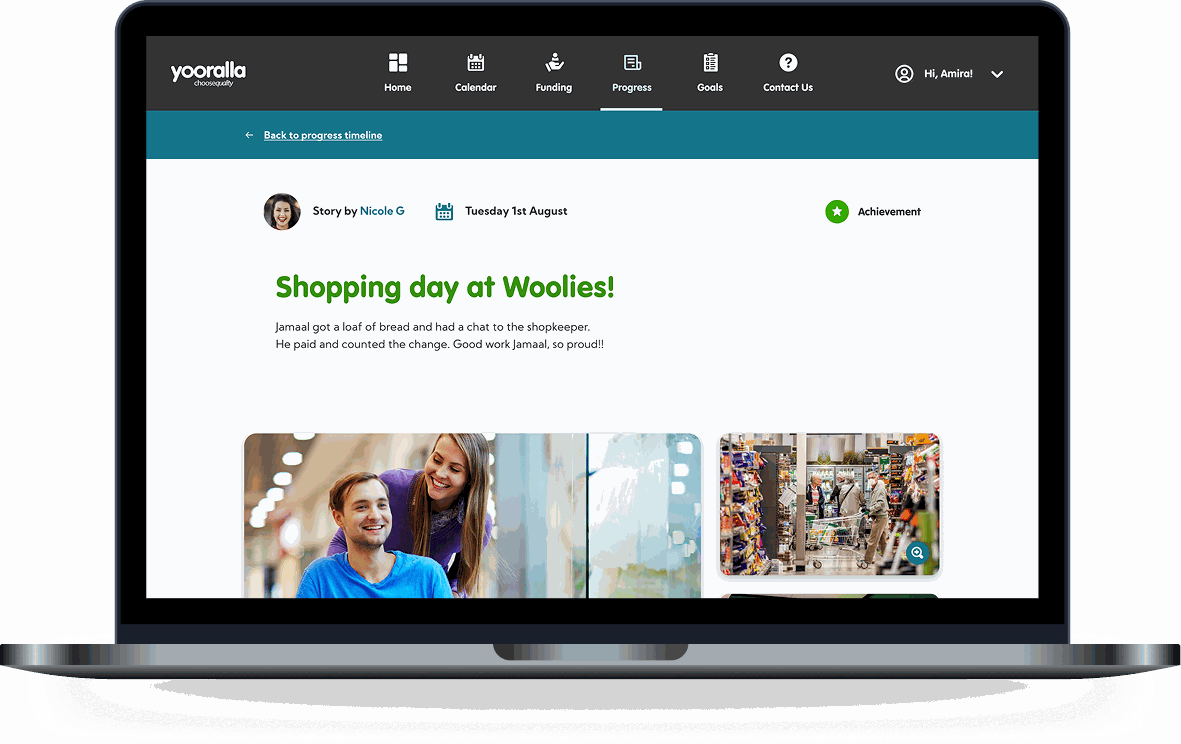
We reworked the entire framework and created Progress Stories, a system designed to capture small moments and share them in near time with the entire care network. Based on the strength of the pitch alone, the Yooralla C-Suite immediately reallocated funding and went ahead with the new design activity.

Yooralla NDIS customer portal dashboard displayed on a laptop

Built for the moment, in the carer's hand

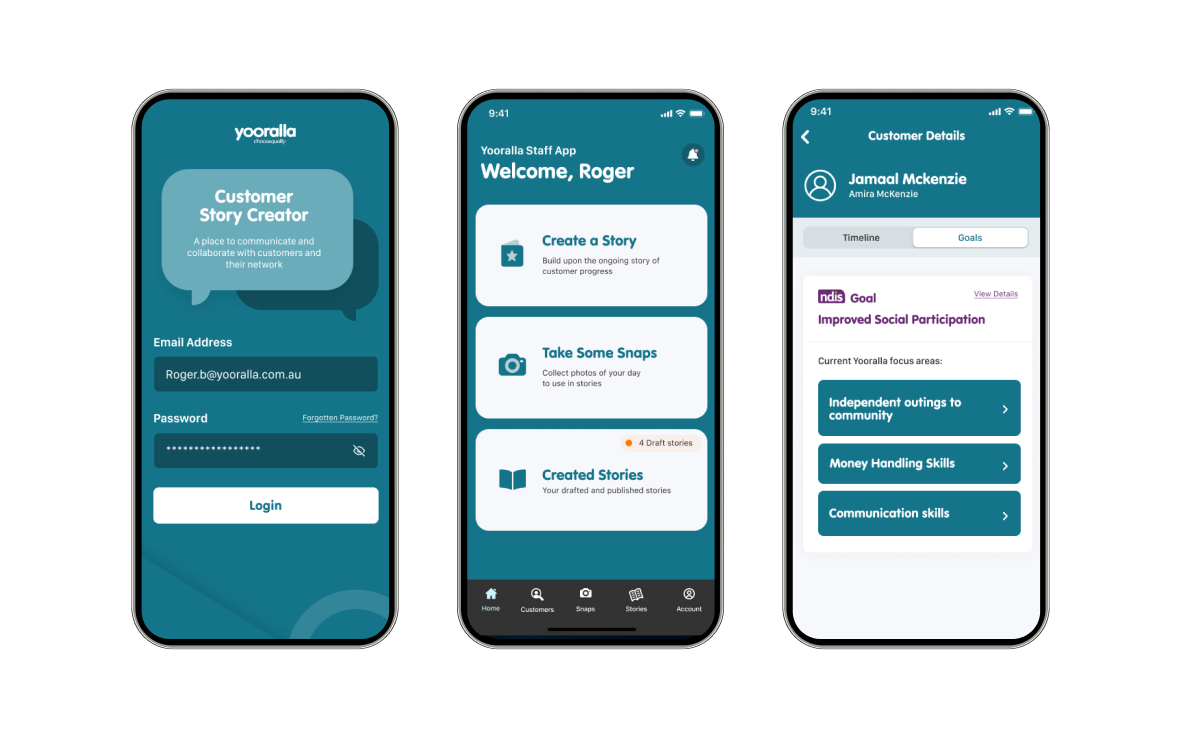
Support work happens away from a desk. For capturing progress to become part of a carer’s day rather than another task at the end of it, it had to take seconds and happen in the moment. So we built Customer Stories as a mobile app in React Native: a carer opens the app, chooses the person they support, and creates a story from a photo and a short sentence in the time it takes to have the conversation.

Each story is tagged to one of that person’s NDIS focus areas, so a moment on a shopping trip or in the kitchen is filed against the goal it speaks to. Carers can take snaps through the day and keep drafts, then publish a story when it is ready for the person’s network to see.

Connected to the platform Yooralla already ran on

The stories were only useful if they reached the same place as everything else. Yooralla’s client goals, plans and funding records lived in its Salesforce platform, so we connected the app to that platform over the Salesforce Force API. A story captured on a phone reached the client’s record, with no second system to reconcile and no re-keying. The moment a carer noticed and the evidence a planner relied on became the same piece of data.

That join is what made the volume matter. The stories created in the first month were not notes stranded in a separate tool. They landed against the goals they belonged to, ready to support the next NDIS funding review.

Our impact

  • Over 4,000 progress stories created in the first month after launch
  • Carers began using the app collaboratively with clients, diarising learnings and setbacks alongside achievements
  • Clients gained deeper understanding of their own triggers and challenges, enabling more focused goal-setting
  • Consistent documentation created stronger evidence for NDIS funding reviews
  • Greater sense of ownership and connection for people living with disability and their care networks
Yooralla NDIS focus area detail for independent outings to community Yooralla NDIS goals screen showing Improved Social Participation focus areas Yooralla Progress Stories post about a carer-shared shopping day at Woolies


Melbourne HQ

Level 3/88 Jolimont St,
East Melbourne VIC 3002
hello@conducthq.com
1300 368 277

Office hours

Monday – Friday
8:30am – 5:30pm AEST
Closed weekends and
Australian public holidays