How much does a website cost in Australia? (2026 guide)
Quick answer: In Australia in 2026, a small template-based website typically runs from around $2,000 to $10,000, a custom business website from around $15,000 to $50,000, and a large custom or enterprise build from around $80,000 to $250,000 or more. The range is wide because the price has little to do with the platform and almost everything to do with the design, research and content work behind the site.
“How much does a website cost” is one of the hardest questions to answer with a single number, because the truthful response is a range so wide it sounds evasive. A website can cost two thousand dollars or two hundred thousand, and both can be the right number. The difference is rarely the technology. A small business brochure site and a regulated government platform might both be built on the same CMS, yet one costs twenty times the other.
So the useful question is not “what does a website cost” but “what am I actually paying for”. This guide gives realistic 2026 price bands for the Australian market, explains what moves the number, and sets out where the budget really goes on a website built to perform.
What a website costs in Australia in 2026
These are indicative market bands, not fixed quotes. Where a project lands depends far more on scope than on platform.
- Template / DIY (around $2,000 to $10,000). A Squarespace, Wix or off-the-shelf WordPress theme, set up by a freelancer or small studio. Fine for a simple presence: a few pages, standard layout, light content. The constraint is that the template, not your customers, decides what is possible.
- Custom small-business website (around $15,000 to $50,000). A bespoke design on a flexible platform, with real information architecture, custom layouts and a content pass. The right band for an established business whose website does actual work: generating enquiries, explaining a considered offer, carrying a brand.
- Large custom or enterprise website (around $80,000 to $250,000+). Multi-stakeholder sites with serious content volume, accessibility and compliance requirements, integrations, and audiences that matter. Government, health, fintech, large not-for-profits. The cost is in the research, the design system and the coordination, not the code.
- Ongoing (hosting, maintenance, iteration). Budget for the life of the site, not just the launch: hosting and security, content updates, and the iteration that keeps a site working after it ships. This ranges from a modest monthly fee to an ongoing retainer depending on how active the site is.
Notice what the bands have in common: the jump from one to the next is a jump in design and content scope, not in technical complexity. That is the part most quotes hide.
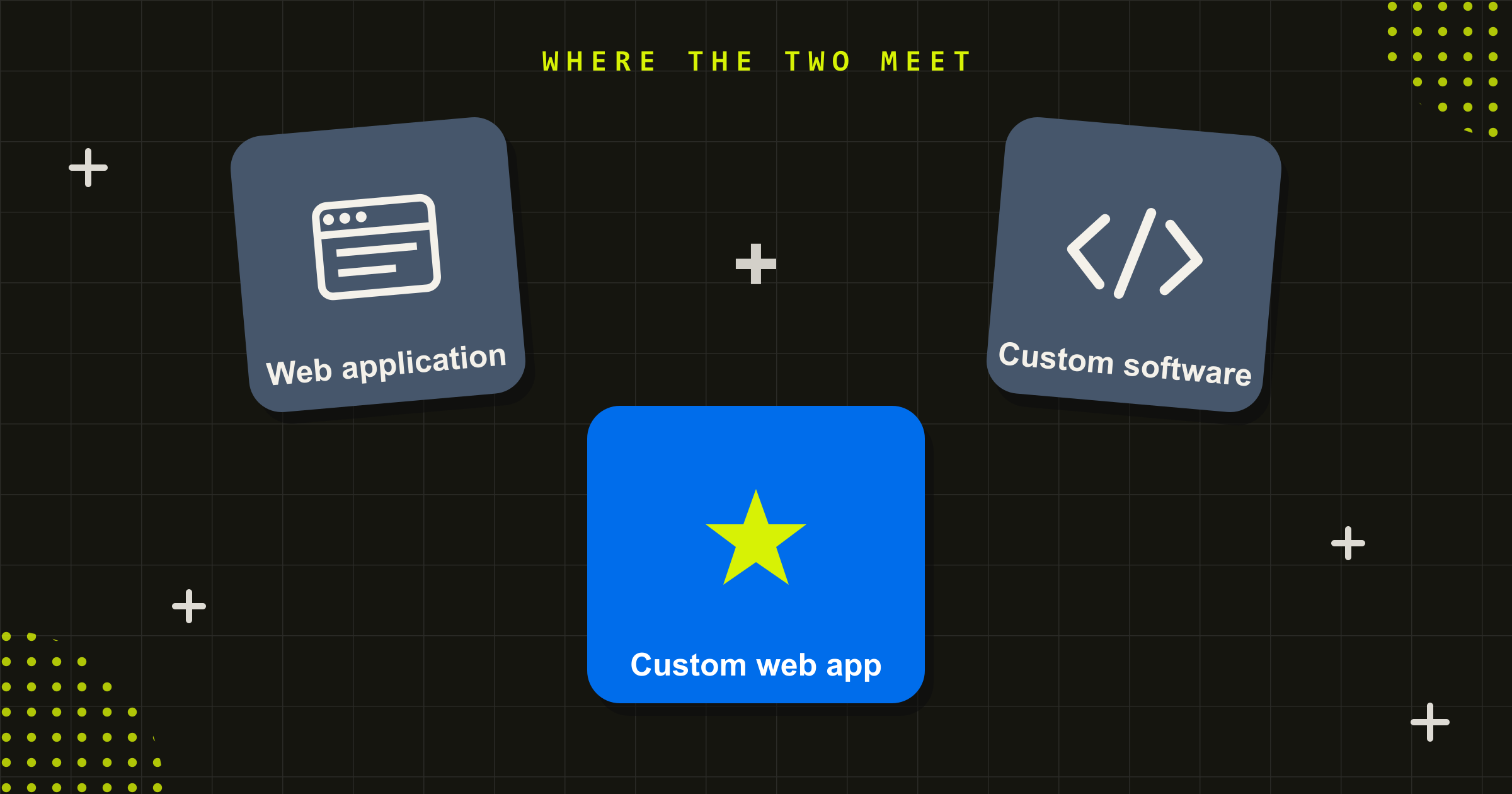
One boundary worth drawing, because it changes the budget entirely: a website can be large and still be a website, a multi-audience government site or a content-heavy brand platform. But when the cost is driven by functionality rather than content, logins, dashboards, transactions, complex data and custom workflows, you have usually crossed into web application territory. That is a different discipline, and pricing it as a website undersells the work on both sides. The bands above are for websites whose job is content, audience and brand. If your project is really a portal or a platform, scope it as a web application from the start.
Where the budget actually goes: the 80/20 flip
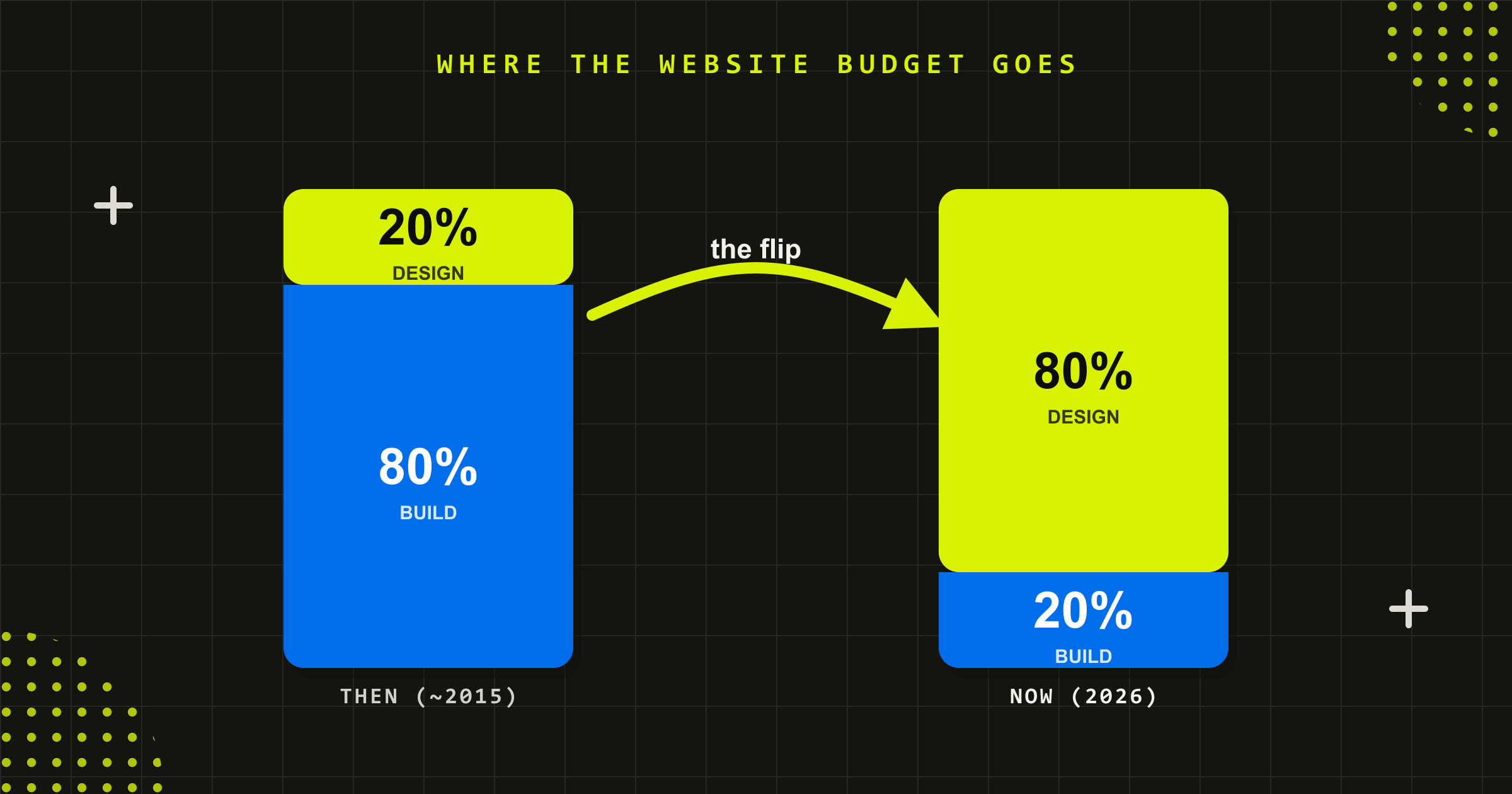
A decade ago, building a website was mostly an engineering job. Custom code, hand-built templates, a long development cycle: maybe 80% of the budget went to development and 20% to design. Modern platforms and tooling have flipped that. The build itself, on Webflow, WordPress, Drupal or similar, is faster and more commoditised than it has ever been. The work that determines whether a website succeeds has moved to the front: research, information architecture, content, prototyping, testing, accessibility, and the search and performance work that makes a site findable and fast.
On a website built to perform, the larger share of the budget now goes to that design-led work, not to the build. When a quote looks expensive, it is usually because it includes this work. When a quote looks cheap, it is usually because it does not, and that work either gets skipped or lands back on you. The cost did not disappear; it moved.
What drives a website’s price up (and what doesn’t)
The factors that genuinely move the number:
- How many audiences and journeys the site serves. One product, one buyer is cheap. Multiple audiences, multiple paths, multiple stakeholders to align is where the work compounds.
- Content. Who writes it, how much there is, and whether it needs structuring and migrating. Content is the most consistently underestimated line in any website budget.
- Research and testing. Whether the design is validated with real users before build, or assumed. This is where good money is spent and where cheap projects cut.
- Accessibility and compliance. WCAG conformance, government standards, regulated-industry requirements. Non-negotiable for some organisations, and real work.
- Integrations. Connecting the site to a CRM, a payment system, a membership database or an existing platform.
The factor people most often misjudge is the platform. It does affect the cost, but not the way people assume. A visual platform like Webflow is faster and cheaper to build on; a custom WordPress, Drupal or GovCMS build is more development-heavy and costs more to produce, which is why a focused Webflow site and a custom enterprise build sit in different price bands. So the platform moves the build line up or down. What it does not change is that design, content and research stay the larger share of any serious budget. The platform is a fit-for-purpose decision that follows from the design work, not a lever you pull to save money, and Conduct works across Webflow, WordPress, Drupal, GovCMS, Umbraco and Shopify, telling you when one of them is not the right answer.
When a cheap website costs more
A low quote is not automatically poor value, and a high one is not automatically good. But a price well below the bands above usually means one of three things: the design and content work has been skipped, the site is a template with your logo on it, or the real costs will arrive later as change requests and rebuilds. For a personal project or a simple presence, that can be exactly right. For a website that has to perform for real audiences at scale, the cheapest option often becomes the most expensive one, because it gets rebuilt within two years.
The real test is not the price. It is whether the quote includes the work that makes a website succeed, or quietly leaves it out.
What you’re paying a senior team for
At the higher bands, the cost is people: senior designers, researchers and developers who have done this before and make fewer expensive mistakes. Conduct has designed and built websites since 2008, across government, fintech, health, education and not-for-profits. The GO Markets site is a fintech Webflow build; IntelliHub is energy-sector infrastructure. The throughline is that the visible site rests on a layer of research, architecture and content work that never shows on the surface but determines whether it performs.
If you are scoping a website and want a realistic number for your situation rather than a band, our website design and development team can talk it through. Fifteen years of builds across regulated and enterprise settings sits behind that estimate.
A website’s price is set by the thinking that goes into it, not the platform it runs on. That is also what decides whether it was worth the money.
Frequently asked questions
How much does a website cost in Australia in 2026?
A small template-based website typically costs around $2,000 to $10,000, a custom business website around $15,000 to $50,000, and a large custom or enterprise build around $80,000 to $250,000 or more. These are indicative bands: where a project lands depends on the design, content and research scope far more than on the platform.
Why is the price range so wide?
Because “a website” covers everything from a five-page template to a multi-stakeholder regulated platform. The technology is often similar; the difference is the amount of research, information architecture, content and testing involved. Scope, not platform, sets the price.
Does the platform (Webflow, WordPress, Drupal) affect the cost?
Yes, but less than the design scope does. A visual platform like Webflow is faster and cheaper to build on; a custom WordPress, Drupal or GovCMS build is more development-heavy and costs more, so a focused Webflow site and a custom enterprise build sit in different bands. The platform moves the build line, while design, content and research stay the larger share of the total. A good agency picks the platform on fit for the brief, not to hit a price.
What are the ongoing costs of a website?
Budget for the life of the site, not just launch: hosting and security, content updates, and the iteration that keeps it working. Depending on how active the site is, this ranges from a modest monthly fee to an ongoing support retainer. A website is not a one-off purchase; it needs to be kept current.
Why are some website quotes so much cheaper than others?
A quote well below market usually means the design and content work has been left out, the site is a template, or the real costs will arrive later as changes and rebuilds. That can be fine for a simple presence. For a website that has to perform at scale, the cheapest option often becomes the most expensive once it is rebuilt.


How long does it take to build a website?
A simple site can be weeks; a custom business website is usually a couple of months; a large enterprise build runs longer. The timeline is driven by the same thing as the cost: the depth of research, content and design, not the build itself.
Charlie Pohl
More from the Journal